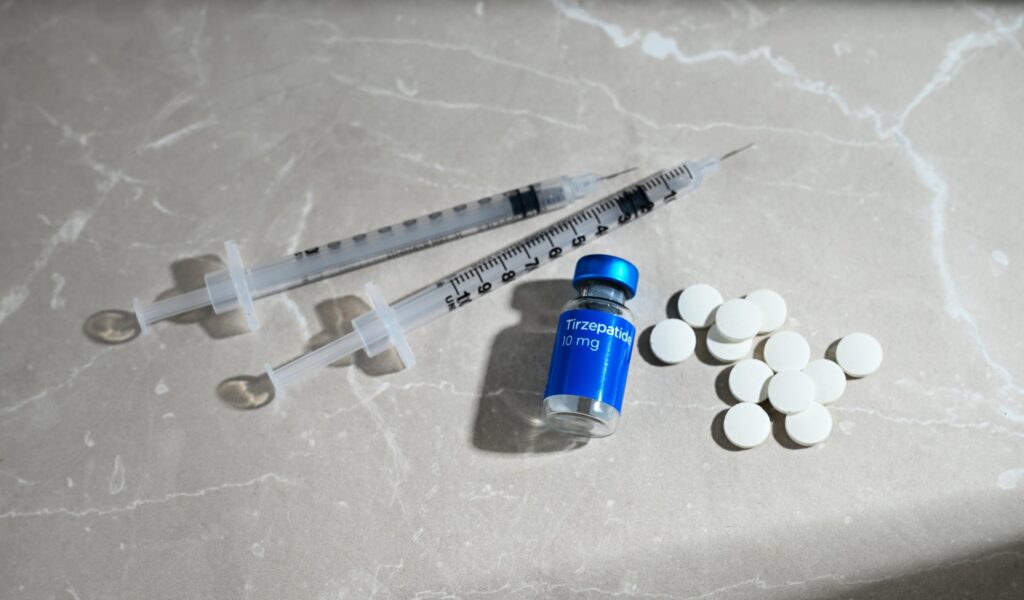
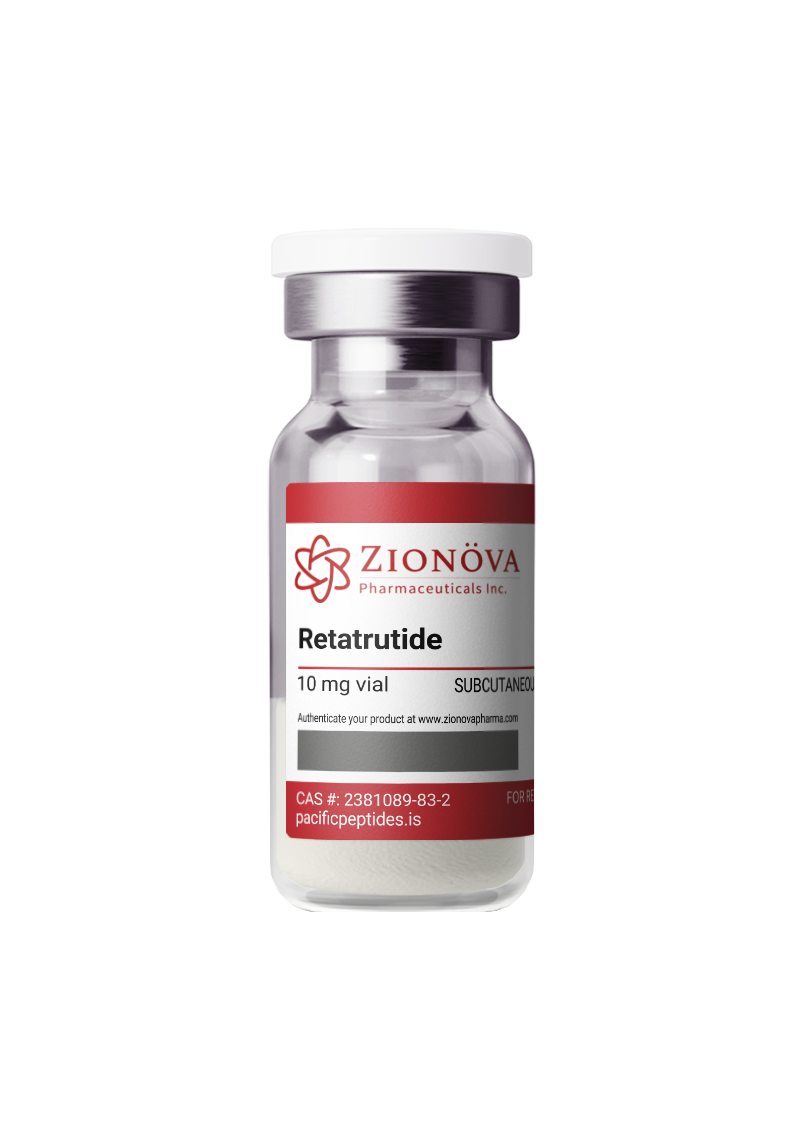
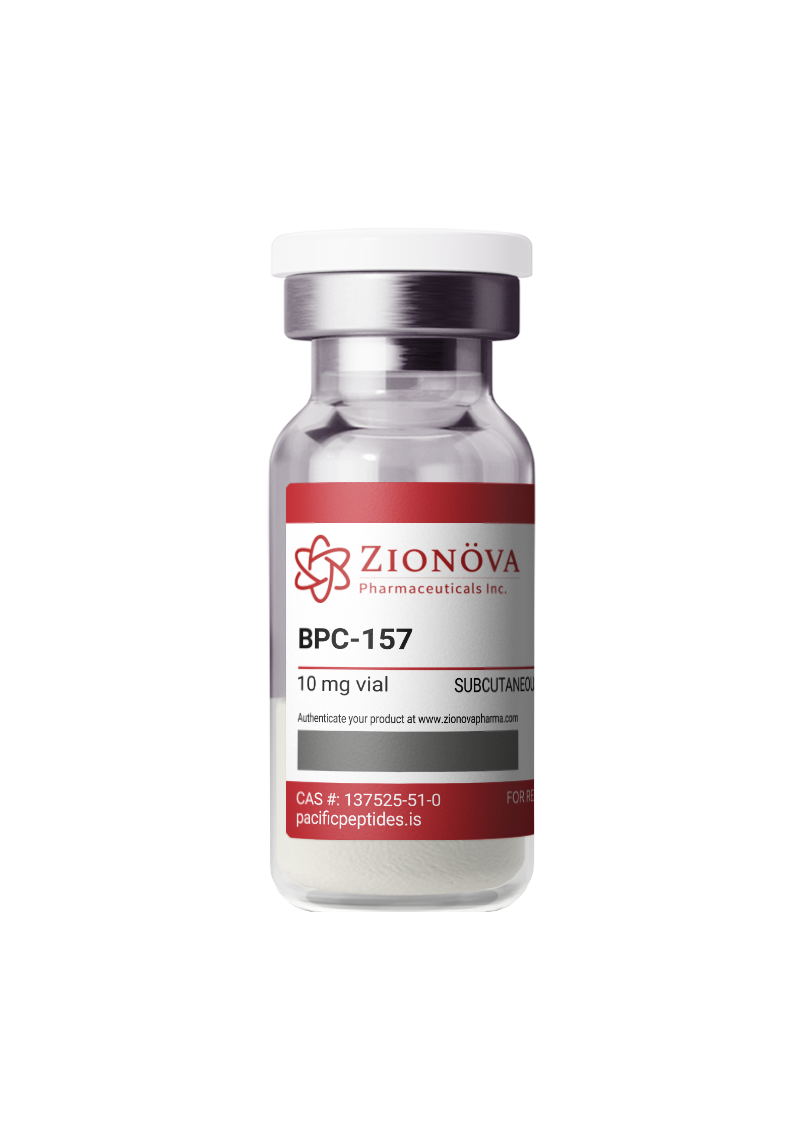
Most peptides are injectable, and that is not a marketing decision. It is a consequence of what peptides are made of. So when an oral version of something shows up, the useful question is not whether oral is better. It is what had to change to make an oral version work at all, and whether that change applies to the compound you are actually looking at.
Why Peptides Are Injected in the First Place
A peptide is a chain of amino acids. Your digestive system exists to break chains of amino acids apart.
Pepsin starts the job in the stomach at low pH. Trypsin, chymotrypsin and a range of peptidases finish it in the small intestine. By design, almost nothing peptide-shaped survives that gauntlet intact.
Whatever fragments do survive then face the intestinal wall, which is built to admit single amino acids and very small peptides and to exclude larger ones. And whatever crosses that goes straight to the liver through the portal vein for first-pass metabolism before it reaches circulation at all.
Stack those three filters together and oral bioavailability for an unmodified peptide typically lands below one percent, often well below. Injection bypasses all three, which is why the bulk of the peptides catalogue is injectable.
What Makes an Oral Version Possible
There are three routes around the problem, and they are not interchangeable.
- Absorption enhancers. The compound is formulated with an agent that raises local pH and improves permeability at the absorption site. This is the route used for oral semaglutide formulations, and it is why the oral and injectable versions of the same compound are not dose-equivalent.
- Local action. If the intended site of action is the gut itself, systemic absorption is not the goal. Degradation in the small intestine matters much less when the target tissue is the tissue the compound is sitting in.
- It was never a peptide. Some products shelved alongside peptides are small molecules, which are far more robust and absorb on completely different terms.
Pacific stocks one example of each: oral semaglutide 1.5mg, oral BPC-157 500mcg, and oral methylene blue 20mg.
The Dose Numbers Will Not Line Up
This is where people get confused, and the confusion is reasonable.
Look at the oral BPC-157 at 500mcg and the injectable BPC-157 at 10mg and the obvious reading is that one is twenty times stronger than the other. That reading assumes the two are doing the same job by the same route, and they are not.
An injectable vial is a reservoir. The 10mg figure is total content, drawn from across multiple administrations at whatever concentration it was reconstituted to. An oral capsule is a single unit dose.
More importantly, the oral and injectable presentations of the same compound are generally pursuing different targets. Oral BPC-157’s rationale is action in the gastrointestinal tract where it lands. Injectable BPC-157’s rationale is systemic distribution. Comparing their milligram figures is comparing a total to a unit, for two different purposes.
Never convert between the two by arithmetic. The numbers are not on the same scale.
Methylene Blue Is Not a Peptide
Worth saying plainly, because it sits in the same catalogue and gets discussed in the same breath.
Methylene blue is a synthetic small-molecule dye, a phenothiazine derivative with a molecular weight around 320. For comparison, retatrutide is roughly 4,900 and semaglutide roughly 4,100.
Small molecules of that size absorb orally without any of the engineering a peptide requires. There are no proteases that target it, it is not degraded by the mechanisms that destroy peptides, and it does not need an absorption enhancer. Its oral availability is a property of the molecule, not a formulation achievement.
So the fact that it comes as an oral says nothing about whether other compounds in the catalogue could. It is in a different chemical class entirely.
Practical Differences in Handling
Beyond the pharmacology, the two formats behave differently day to day.
Orals require no reconstitution, no diluent, no syringes and no calculation. That is the real convenience argument, and it is a genuine one.
Injectables require all of the above, and in exchange they offer dose flexibility that a fixed-strength capsule cannot. A reconstituted vial can be drawn at a range of volumes. A capsule is what it is. The mechanics are covered in Mixing and Dosing and in Peptide Prep 101.
Storage also diverges. Lyophilised powder in a sealed vial is stable for a long time cold and dry. Once reconstituted, the clock starts. Oral formulations are generally more forgiving on storage but less forgiving on shelf life, because they are already in their final form.
The Variability Problem
There is one trade-off that does not get mentioned often and probably should: oral delivery is far less consistent than injection.
An injection delivers a known quantity into tissue. Absorption from the depot varies somewhat between sites and individuals, but the amount administered is not in question.
Oral absorption depends on gastric emptying, stomach contents, pH, transit time and gut flora, all of which differ between people and differ in the same person from one day to the next. For the oral formulations of compounds that also exist as injectables, published figures show wide variation between individuals, and that variation is intrinsic to the route rather than a flaw in any particular product.
The practical consequence is that an oral format trades precision for convenience. Whether that trade is worth making depends entirely on how much precision the application needs, which is a different answer for a compound acting locally in the gut than for one expected to reach a specific systemic level.
What to Check Before Choosing
Three questions settle it in most cases.
Is the target systemic or local? If the intended site of action is the gut, oral has a real argument. If it is anywhere else, oral needs an absorption story.
Does the oral version state how it solves the absorption problem? A product that says nothing about formulation, enhancer or molecular class is asking you to assume the problem went away on its own.
Is the compound even a peptide? A surprising share of oral products shelved with peptides are not, and that single fact explains most of their properties.
Further questions are answered in the FAQ.
Nothing here is medical advice, and none of the above is a recommendation to use anything. Talk to a qualified healthcare professional before starting any new compound. What is legal to buy, hold or import varies by jurisdiction, so check the rules where you live.