If you spend any time reading about growth hormone peptides, ipamorelin comes up first more often than not. It is the compound people tend to start with, the one most often paired with others, and the one with the cleanest reputation in its class.
Here is why it earned that position, how it actually works, and how it fits with the compounds it gets stacked alongside.
What Ipamorelin Is
Ipamorelin is a short synthetic peptide, five amino acids long, that acts as a growth hormone secretagogue. That means it prompts your pituitary gland to release more of its own growth hormone rather than supplying growth hormone directly.
It does this by acting at the ghrelin receptor, the same receptor targeted by the body’s hunger hormone. In the pituitary, activating that receptor triggers a pulse of growth hormone release, which in turn raises IGF-1.
Why It Became the Starting Point
Ipamorelin’s reputation comes down to selectivity. Older compounds in the same class, such as GHRP-6 and GHRP-2, also act at the ghrelin receptor, but they were associated in early research with noticeable increases in appetite and in other hormones, including cortisol and prolactin.
Ipamorelin was developed as a more selective option. In the research that established it, it raised growth hormone with much smaller effects on those other hormones. That cleaner profile is the main reason it became the default first compound in the class.
How It Fits With CJC-1295
Ipamorelin is rarely discussed on its own for long, because it is so often paired with CJC-1295. The pairing makes sense once you see the two mechanisms side by side.
- Ipamorelin acts at the ghrelin receptor and triggers growth hormone release.
- CJC-1295 is a GHRH analogue. It mimics growth hormone releasing hormone, the body’s own signal for growth hormone release.
Two different receptors, both pointing at the same outcome. Research on combining the two pathways is the reason the pair shows up together in the CJC-1295 and Ipamorelin blend.
With DAC or Without: Two Different Compounds
This is the part that trips people up most. CJC-1295 comes in two forms, and they are not two strengths of the same thing.
| CJC-1295 without DAC | CJC-1295 with DAC |
|---|
| What DAC is | Not present | A drug affinity complex that binds albumin in the blood |
| Duration of action | Short | Much longer, measured in days |
| Release pattern | A pulse, closer to natural release | A sustained elevation |
| Why it gets paired with ipamorelin | Its short pulse matches ipamorelin’s | Less commonly paired, different profile |
DAC stands for drug affinity complex. It is an added chemical group that lets the peptide bind to albumin, a protein in the blood, which protects it from breakdown and keeps it active far longer.
That makes the two forms behave very differently. The version without DAC produces a short pulse that lines up with ipamorelin’s own short action, which is why the two are usually paired in that form. The version with DAC produces a sustained rise instead.
Pacific stocks both: CJC-1295 without DAC and CJC-1295 with DAC. If you are comparing them, compare them as two compounds, not as a weaker and stronger version of one.
Ipamorelin Against the Other Secretagogues
Ipamorelin is one of several compounds that raise growth hormone, and each works a little differently.
Sermorelin is an older GHRH analogue with a short action, closer in mechanism to CJC-1295 than to ipamorelin.
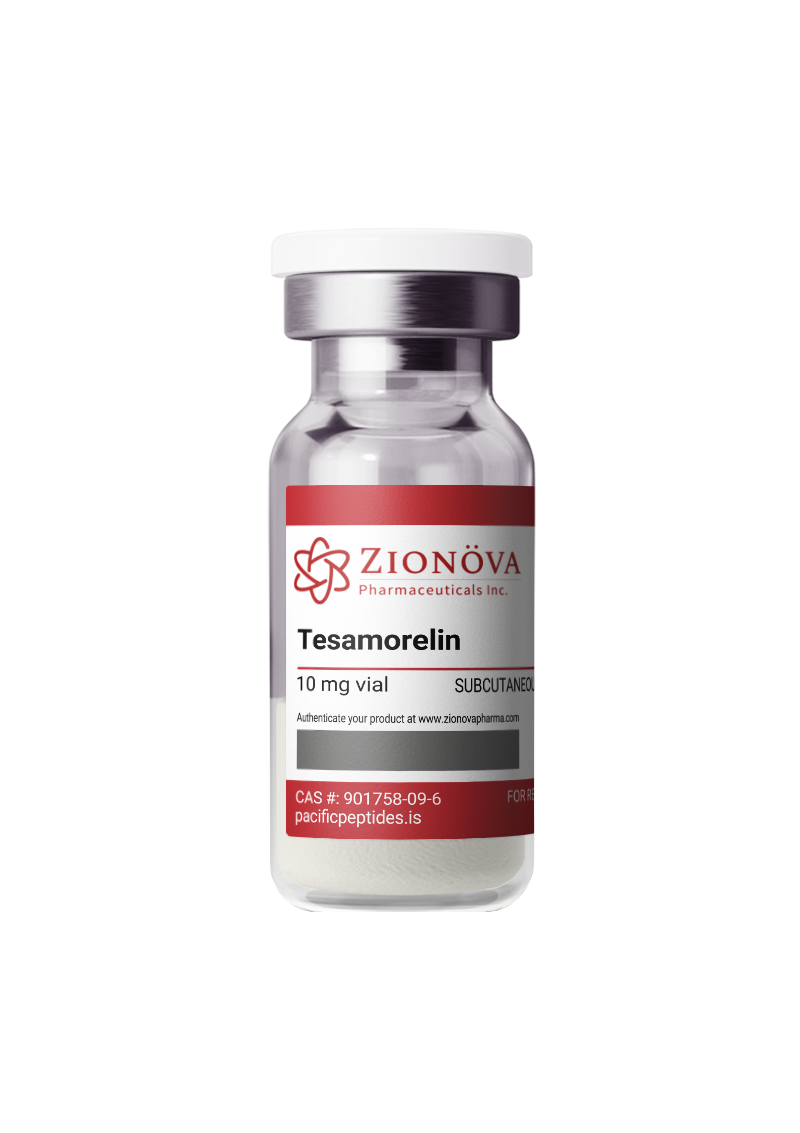
Tesamorelin is a more stable GHRH analogue with the largest body of human clinical data in this group, centred on visceral fat.
Ipamorelin is the odd one out in that it works through the ghrelin receptor rather than the GHRH receptor, which is exactly why it pairs so well with the GHRH analogues instead of competing with them.
Appetite: The One Effect It Does Not Fully Escape
Ipamorelin’s selectivity is real, but it is not total. The ghrelin receptor is, after all, the receptor that signals hunger, and activating it can still nudge appetite.
What the research suggests is that the effect is much milder than with GHRP-6, the older compound that became known for a strong appetite response. That difference is a large part of why ipamorelin became the preferred option in the class.
It is worth knowing about because it is the effect most likely to be noticed outside a lab setting, and because it follows directly from the mechanism. A compound that works through the hunger receptor will rarely be completely free of hunger effects.
What the Research Does and Does Not Show
It is worth being clear about the limits. The research establishing ipamorelin’s selectivity and its effect on growth hormone release is solid as far as it goes. What is much thinner is evidence about longer-term outcomes, such as body composition or recovery, in healthy, training people.
Raising growth hormone and producing a measurable change in performance are two different results. The first is well documented. The second is often assumed.
Handling
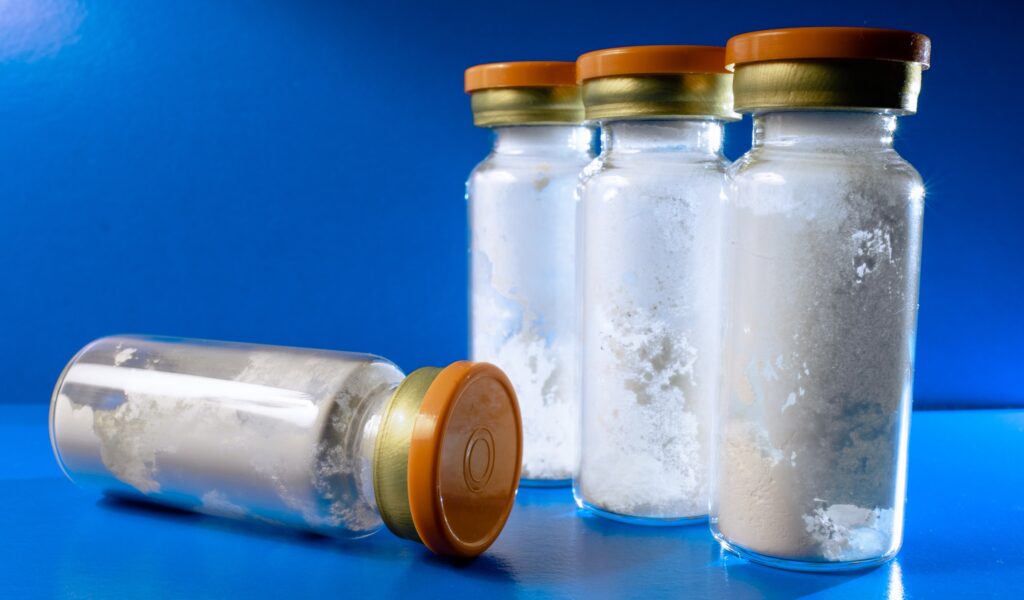
Ipamorelin ships as a lyophilised powder and needs reconstitution before use. Concentration depends entirely on how much bacteriostatic water you add, and the arithmetic is covered in Mixing and Dosing.
Once mixed, it needs refrigeration and protection from heat. Pacific carries Ipamorelin 10mg on its own as well as in the blend.
The Short Version
Ipamorelin is a five amino acid growth hormone secretagogue that works at the ghrelin receptor and raises growth hormone with relatively little effect on other hormones. That selectivity is why it is the usual starting point. It pairs with CJC-1295 because the two work through different receptors, and CJC-1295 with DAC and without DAC are two different compounds with very different durations, not two strengths. Further questions are answered in the FAQ.
Nothing in this article is medical advice, and nothing here recommends using any compound. Talk to a qualified healthcare professional before starting anything new. The rules on buying, holding and importing peptides differ between jurisdictions, so check what applies where you live.